 Hammer Films scored one of its greatest successes with One Million Years B.C. (1966), a one-off collaboration with stop-motion special effects master Ray Harryhausen. The film was notable to fantasy film enthusiasts both for Harryhausen’s dinosaur creations and for its iconic, much-imitated poster: a tanned and fit Raquel Welch striking a pose in a fur bikini. Never to let a successful effort go uncloned, Hammer quickly established its own prehistoric adventure subgenre, including Slave Girls (aka Prehistoric Women, 1967) and the (improbably) Oscar-winning When Dinosaurs Ruled the Earth (1970). The exploitation elements were simple and straightforward: dinosaurs (if they could afford them), exploding volcanoes, and attractive actresses in bikinis, grunting a lot. Something for the kids, and something for Dad. Everybody’s happy…for a while.
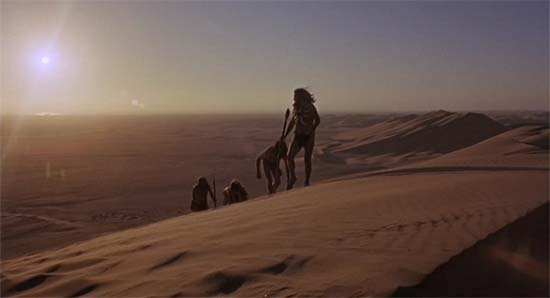
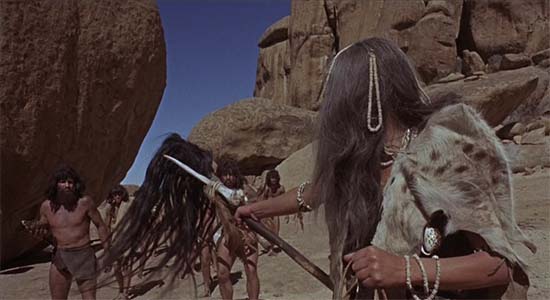
 Because by the time Creatures the World Forgot arrived, it should have been pretty clear that the genre was running dry, and becoming increasingly pointless. First: a few pluses. Director Don Chaffey returns, having helmed the Welch/Harryhausen vehicle that started the craze. Chaffey had a long and busy career in films and television, and his resume includes cult classics (such as 1963’s Jason and the Argonauts and episodes of the seminal TV series The Prisoner) and paycheck-cashing, defeated sighs (like 1979’s bizarre kiddie flick C.H.O.M.P.S.). No matter what work he was given, Chaffey treated it with great seriousness, and this proud work ethic is clearly on display in Creatures the World Forgot. He gets the job done competently. He works extra hard to get past the limitations of the actors speaking no English, and relies upon visual storytelling, like a silent film augmented by lots of grunting. The film looks gorgeous; shot on location in Africa, it appropriates the local wildlife and some spectacular scenery, including a trek through desolate sand dunes, and action staged around giant round boulders which, though part of the natural landscape, look like a Surrealist painting. Chaffey also downplays the exploitation elements as much as possible, and though I’m not sure how writer/producer/studio exec Michael Carreras felt about this (I suspect there might have been some mild creative disagreements, but will leave it to the Hammer scholars out there to inform me), this is not a “sexy” film by any means; quite the opposite. The cheesecake has been replaced by an anthopological seriousness which may have been influenced by the “Dawn of Man” sequence in 2001: A Space Odyssey (1968). But Creatures is certainly not as rigorously informed. This is just a prehistoric survival adventure. Was it a wise decision to play it like a National Geographic special, or a severe folly?
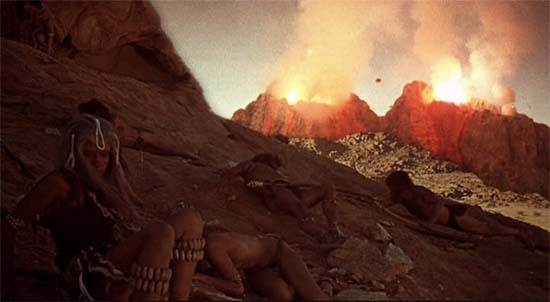
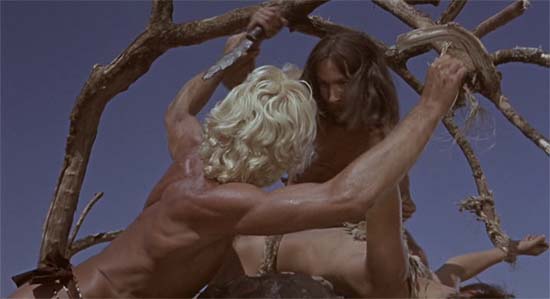
 This isn’t 2001, and it’s not Quest for Fire (1981) either. The quasi-epic plot covers two generations of a prehistoric tribe, first fleeing from their homeland after it’s destroyed by a volcano, then attempting to survive in a parched desert landscape, and squabbling over who should lead them. Midway through the film, two sons are born (ominously, the mother dies in childbirth): one blond and good, the other brunette and eeeevil. An omen (lightning striking a tree) leads the tribe’s female shaman to determine that the blond child will be their future chieftain, and so she marks him with a scar upon his chest. There’s some more squabbling…quite a bit of squabbling, actually. Eventually they discover a pretty cavegirl played by Julie Ege, who becomes an object of jealousy; in a scene strangely reminiscent of the climax of Supervixens, she’s tied up at the top of a mountain, and our blond hero must fight to rescue her. I have to tell you, the ending to Supervixens is a lot more entertaining, mainly because Charles Napier goes crazy and starts chucking sticks off dynamite at the good guy. But any given minute of a Russ Meyer film is more entertaining than the whole of Creatures the World Forgot.
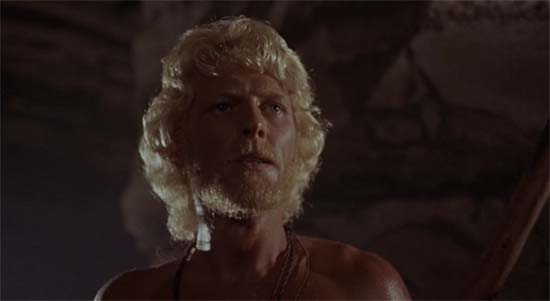 The film has noble intentions, but it seems like a wasted effort. Because it does not seem to have any kind of anthropological veracity, we’re treated to scene after scene which is not terribly enlightening. Which is to say, it appears to be written by Michael Carreras, not Arthur C. Clarke. It’s a pulp adventure film, and everybody knows it. So your enjoyment is based solely on whether or not you want to see this kind of cheesy pulp adventure with an extra layer of grit: a tribesman picking up a scorpion, ripping off its tail, and chowing down; painful childbirth in the wild; a weird scene in which the young bad guy assaults a girl with a live porcupine in his hands. There’s nudity in the film (Hammer was beginning to make it a prerequisite at the dawn of the 70’s, as a marketing tool), but again I wonder if there weren’t some Carreras/Chaffey conflict of interest here. Chaffey refuses to make a leering cheesecake film like When Dinosaurs Ruled the Earth; he de-eroticizes the fleeting nudity, and refuses to let his camera linger upon it; there’s plenty of skin, but he cakes it down with mud and dirt, or covers it with necklaces of warthog-tusks. Thing is, though, When Dinosaurs Ruled the Earth, for all its campiness, is a lot more entertaining than this film. Creatures the World Forgot just isn’t very fun at all.
 The title, of course, is misleading. There aren’t any dinosaurs (sorry, Creationists), and the only beastie, apart from the native animals of Africa who put in cameo appearances, is a cave bear which is quite obviously a man in a cheap costume. A more accurate title would have been “Creatures the Film Forgot.” It doesn’t help that the poster prominently features Julie Ege, even though she hardly appears in the film at all, and boasts the tagline: “SEE the sensational new star Julie Ege. She’s a creature you’ll never forget!” So…hey, chaps…who needs dinosaurs? We’re all men, aren’t we?
I will say this: of all the films Hammer released in 1971, this one, cave bear suit notwithstanding, has the most expensive look, largely due to the spectacular locations. But this kind of film either needed more credibility (Quest for Fire), or just campy parody (1981’s Caveman). Hammer would desperately look to exploit more trends, but for this studio, the smoking volcano was already on the horizon.
 Three tales of the decadent and the damned…
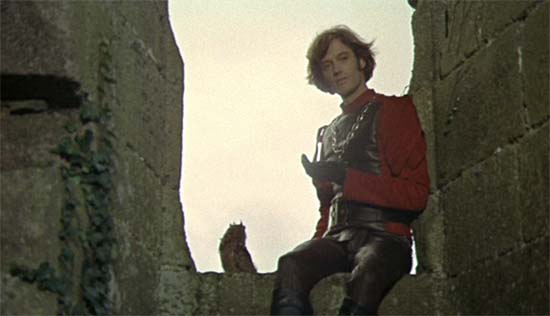
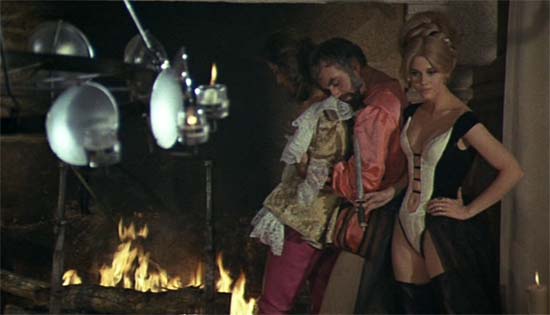 His short here features Barbarella‘s star, and Vadim’s current squeeze, Jane Fonda. In “Metzengerstein,” Fonda is the corrupt Hungarian countess Frederique Metzengerstein (flipping the gender of Baron Frederick in Poe’s original), indulging in orgies at her estate, playing with her pet baby leopard, and, for kicks, cruelly tormenting her vassals. The fashion-conscious Vadim ensures that in each scene, no matter how brief, Fonda is wearing a new, eye-popping, absurd ensemble, most of which share the science fiction comic-strip look of her famous wardrobe in Barbarella. When Frederique meets her cousin, Wilhelm (Peter Fonda), of the rival family Berlifitzing, she becomes obsessed by his beauty and apparent moral purity. Much has been made of the ick factor in Jane Fonda pursuing her brother, but their short moments together are chaste and completely devoid of sensuality. In one moment, the Baron Wilhelm sits at a window in a crumbling castle, feeding an owl, and gazing serenely down at Frederique. It’s not erotic; it’s Harry Potter.
 Of course, it’s also impeccably composed. Vadim winds his way toward the plot gradually, relying equally upon voice-over narration and long, dialogue-free scenes of musical montage, setting a mood with gorgeous cinematography by Claude Renoir. The camera drifts over the action, passing in and out of focus, composing its visual narrative almost impressionistically as we get around to crucial details: Frederique arranges a calamitous fire at the Berlifitzing stables, and Baron Wilhelm is accidentally killed in the conflagration; at that moment, a black horse arrives mysteriously at the Metzengerstein estate, and the image of an identical black horse is somehow burned out of an ancient tapestry she adores. Obsessed with the idea that the horse might be the reincarnation of Wilhelm, Frederique spends every waking hour grooming the creature, riding it through the countryside, even singing it songs (and, in an unintentionally funny moment, whispering secrets into its nostrils). She commands that the tapestry be repaired, and as that work nears its completion, a lightning storm brings wildfires to the countryside; Frederique, upon her horse, rides out, obsessively pursuing her fate. Like most Poe protagonists, she seems to yearn for death.
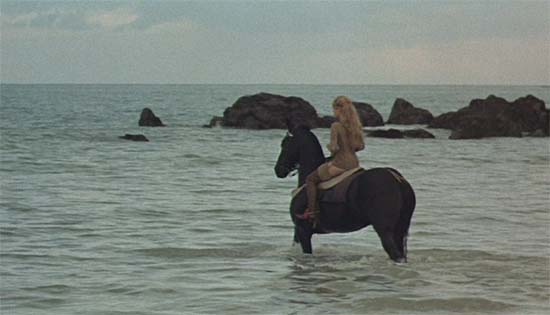 “Metzengerstein” is often considered the nadir of Spirits of the Dead, and it’s certainly the weakest segment, stumbling as it attempts to stride that fine line between art-house fantasy and camp…but it all looks so damn lovely that it’s easy to forgive its shortcomings. Most importantly, however, it establishes a certain fever-dream logic, decadence, and visual splendor that will unite all three of the shorts. In that regard, it performs its duties quite well. It’s an experiment in mood whose indulgences might not have aged well, but aren’t without their charms.
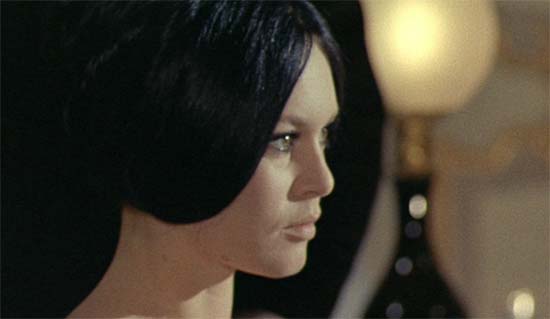
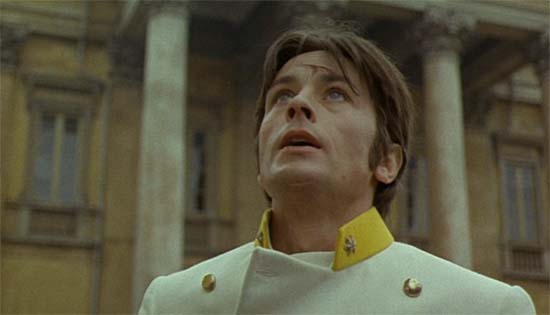 Yes, “William Wilson” is a big step up, but Louis Malle is a more interesting and versatile talent; this short is typical of his style, grounding envelope-pushing material with observant and devastating psychology. Art-house idol Alain Delon plays a dual role as William Wilson, a young man who never misses a chance to exercise his sadistic tendencies as he rises through the social classes; and William Wilson, a mysterious doppelgänger keeping a close eye on him. The framing device is a confessional, as the desperate Wilson #1 intends to confess just one sin, but lays out, unapologetically, a lifetime of crimes to the shocked priest. As a child Wilson strings up a classmate to lower him teasingly into a box of rats, until Wilson #2 arrives. As a med student, he abducts a young woman, binds her naked to an operating table to the delight of his amoral friends, and is about to – rape her? draw blood with his scalpel? – before Wilson #2 intervenes. Finally, he engages in a duel with a beautiful socialite (Brigitte Bardot) as an all-night game of poker. At first, she has the upper hand, and uses every win to further emasculate him verbally. But Wilson’s luck turns, and as dawn breaks, he offers her an all-or-nothing wager, with her body on the betting table. She loses, and he whips her savagely. He’s about to sexually humiliate her as well, before Wilson #2 once more appears, masked like a bandit. He proves to everyone that Wilson #1 was cheating, and immediately gets him disbarred from the club. Subsequently, Wilson #1 murders his double.
 As the doppelgänger is dying, he explains that William Wilson needs him; that in his absence, Wilson will now cease to exist. In existential fright, perhaps, Wilson flees to the church – but cannot obtain the absolution he desires from the priest (who optimistically recommends changing his ways and finding a loyal wife). He sprints to the top of a belltower and hurls himself off it, a moment visually presaged at the beginning of the story. An underrated achievement, Malle’s film conjures the woozy dread of a Poe tale while coldly and clinically dissecting the evil in William Wilson’s heart. The viewer calls into question the veracity of Wilson’s shadow from the very beginning, but while Malle lets the fantastique elements care for themselves (can a man endure if he loses his soul?), he seems more interested in creating a character portrait of a man who can’t recognize his own wickedness.
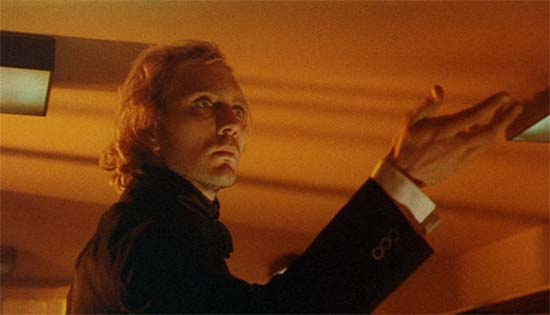
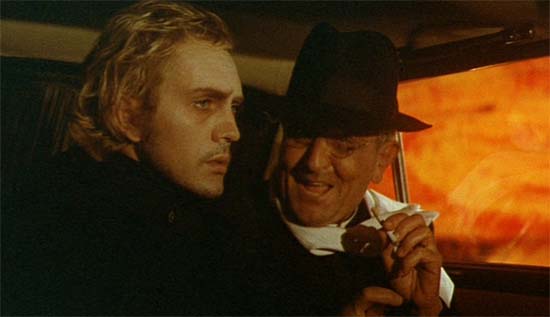 But when Spirits of the Dead is discussed among film buffs, it’s Federico Fellini’s “Toby Dammit” which garners all the enthusiasm, and justifiably so. Fellini liberally adapts Poe’s “Never Bet the Devil Your Head” into, well, a Fellini movie, and all that entails. It’s a kaleidoscopic journey through a contemporary Dante’s Inferno, as seen from the perspective of a British film star, Toby Dammit (Terence Stamp), arriving in Rome to shoot his latest picture, a Western take on the story of Jesus Christ. Taking swigs from a flask while blanched to a skull-like pallor and drenched in sweat, Toby could be Poe himself, transported to late-60’s Cinecittà Studios, surrounded by sycophants, paparazzi, movie producers and hangers-on, observing all of them in confusion, horror, and humor, by turns.
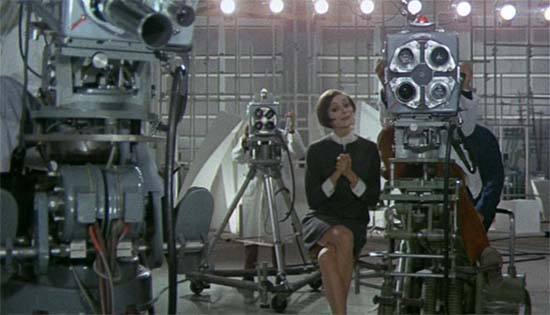 He arrives in an airport populated by surreal tableaus, some of which are two-dimensional, black-and-white cutouts standing in for crowds. The sky is blood-red, and he slinks away from any contact, fleeing, like a vampire, at the flashes of the cameras and any bright lights. After passing through deliberately artificial streetscapes, he arrives at a television studio where he’s met by a madly grinning host seated upon a stool joined to a camera that dollies forward and back again, so that she swoops about in front of him like a bird, conducting an interview that plays like a twisted take on a 1964 Beatles press conference. (“Was your childhood unhappy?” “No,” he responds, “my mother always laughed when she hit me.”) His one goal is to make it through the evening – sit through an awards ceremony, endure the lights and the vultures – on the promise that he’ll be rewarded with a shiny new Ferrari. But he’s haunted by the specter of a blonde-haired girl playing with a white ball. A memory from his childhood? A longing for the simple pleasures of his youth? But the Devil, he insists, will be a little girl.
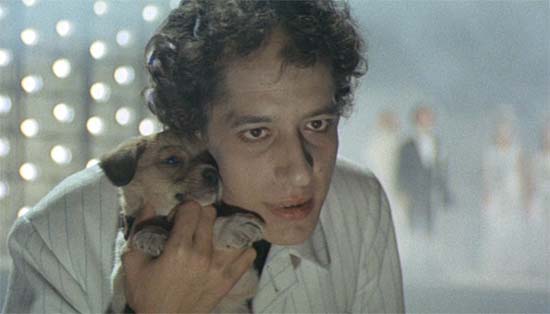 The awards show itself gives Fellini the opportunity to push into full 8 1/2 mode, reflecting all the usual showbiz archetypes in a warped mirror, ghoulishly transforming them. A creepy, Peter Lorre-like magazine photographer states that Toby Dammit has been enlisted for a shoot which will portray him as the god Mars, completely nude. A fashion parade onstage offers new styles with names like “Humiliation.” A typical show business mother introduces her sixteen-year-old daughter to Toby, as though offering her to him as a sacrifice. “Is she a virgin?” Toby asks mockingly, before escaping, giggling, back into his shell. The awards recipients give identical acceptance speeches, carefully practiced humility. Toby winces and squirms, he pulls grotesque faces when he’s asked a question. No one seems to notice; or they laugh, oblivious to the joke.
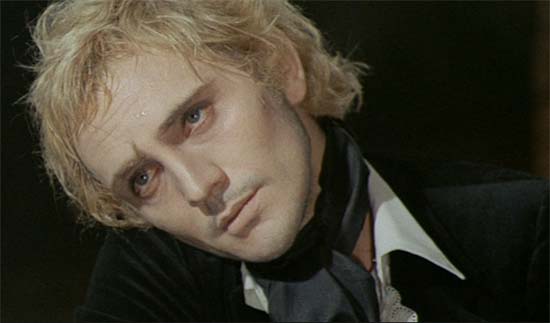 As he hides in the darkness, shadows cloaking his face, one mysterious woman says she understands him. She takes his hand tenderly. A Ray Charles song plays. He looks up at her, and she’s granted a close-up: an austere beauty, in black eyeliner and false eyelashes. Her penetrating eyes seem too large, like a surreal caricature, but Toby seems momentarily moved or affected. It doesn’t last. Accepting his award, he condemns her from the stage, and objects to the notion that anyone would honor him: he’s an alcoholic; he hasn’t worked in a year; he says he’s a fraud. After this meltdown, he runs to his waiting Ferrari. For once, Toby displays glimmers of genuine happiness: alone at last, sensually caressing the wheel of his new sportscar.
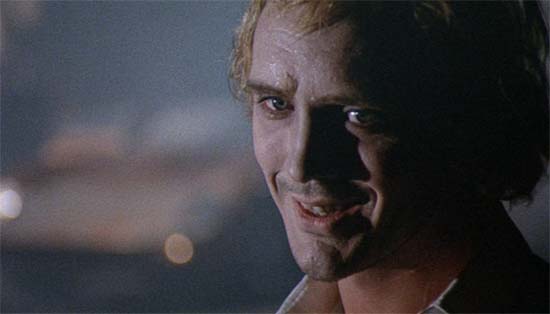 What happens next is both gorgeously shot and indelibly haunting. It’s an achievement, to be sure, but Fellini was on a roll, firing on all cylinders. “Toby Dammit” is sandwiched between Juliet of the Spirits (1965) and Fellini Satyricon (1969), and it plays like a transitional work between those films. In its compression, with a witty script elegantly served by a shot-for-shot compositional inspiration, it’s also one of his most wholly successful works. No wonder, then, that “Toby Dammit” is frequently mentioned to the exclusion of Spirits of the Dead, as though it were not part and parcel of the longer film. But there is a unity in these three shorts that’s somewhat rare among the portmanteau experiments; throughout, it’s a film both creepy and beautiful. It would have been an interesting film regardless, but Fellini, at his most inventive and engaged, raises it to the level of a classic.
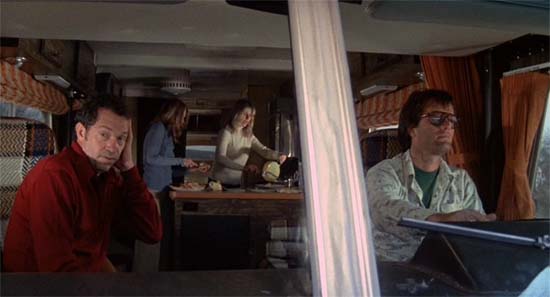 Frank Stewart (Warren Oates) sells and modifies motorcycles, and Roger Marsh (Peter Fonda) races them at the track. As they prepare to head out with their wives (Lara Parker and Loretta Swit) on an epic cross-country vacation to a Colorado ski resort, one imagines they’ll be kicking up dust on their choppers over every hill and dale in-between with blissful fly-splattered grins. But Race with the Devil posits that if you’re going to enter into a war with a coven of Satanists, you can’t depend upon motorcycles. No, it’s the fully-equipped RV that will be your armored tank against evil. In the opening of the film, Fonda, in racer’s uniform, hops off his bike and strides toward the ginormous moving house which will become the principal setting of the rest of the film. His jaw drops in wonder: “Hot damn!” Oates proudly responds, “Thirty-two feet and gleamin’!”
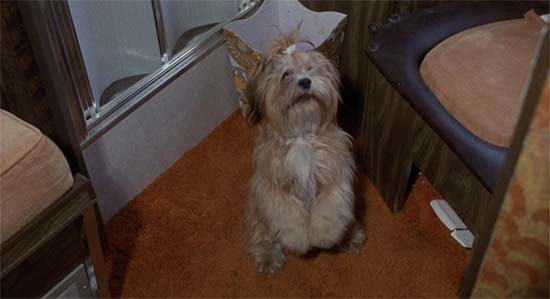 Though nearly every other spec is scrutinized and fawned-over, Roger doesn’t ask how many miles per gallon the RV gets. It’s his crucial mistake. The multiple pit stops which the group makes on their subsequent journey through Hell will balance their lives upon a razor’s edge.
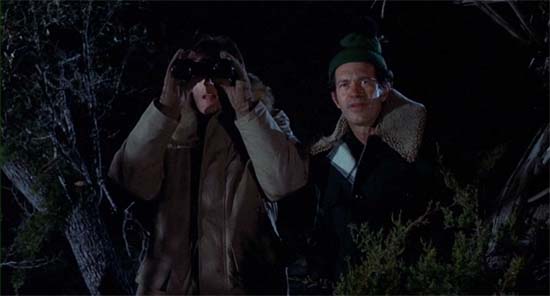 Satanists! The two are somewhat disturbed, until cloaks start to drop and naked females begin cavorting. While Roger hogs the binoculars, Frank asks, “An orgy, maybe? Whew, let me look.” But then out comes the sacrificial knife, down it plunges into trembling virgin flesh, and it’s clear that this is not your typical harmless occultist orgy. Almost simultaneously, Frank’s wife Alice (Swit) blows their cover by kicking open the RV door and screaming, “Frank!” Their wives will continue to be as useful for the remainder of the film.
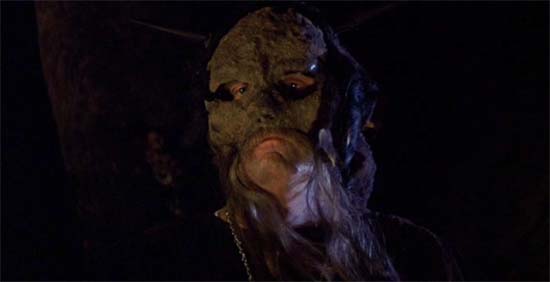 Piling back into the RV as the cultists come sprinting down the hill, they race back toward the road, but their vehicle gets a tire stuck halfway across the creek. Although we can see the Satanists wading into the river (topless men sporting black capes and looking like they got lost on the way to Dragon*Con), Roger announces, “I’ll go get some brush!” – and promptly disappears into the woods. But he’s back a moment later, and as the two men pile the brush under the tire, it gains traction and pulls loose. The cultists hop aboard the back of the RV and smash the window, and the campers battle to shake them off. At last they safely gain the nearby town, and appeal to the sheriff. Although he seems helpful at first, incredulity begins to mount as he takes Roger and Frank back to the scene of the crime: a dead dog has been strung from the tree, and he’s convinced that the local “hippies” have just given the two outsiders a fright; it was only their imagination, coupled with alcohol, that made them think they witnessed a human sacrifice. But that’s not dog’s blood on the dirt, and those weren’t hippies, insists Roger. Back in town, cleaning the RV while waiting for their husbands to return with the police, the women discover an ominous note near the broken window…
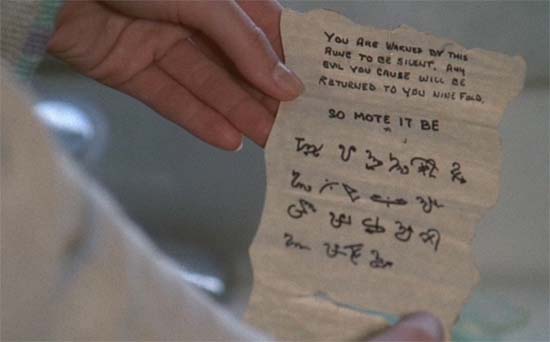 In an attempt to interpret the note’s meaning, it’s decided they’ll head out to the local library. In a tome on witchcraft, they discover a full-color image of an Aztec sacrifice (presumably the author was digressing from the main topic quite a bit). The men have to see this, they decide. Thwarted by the rather polite and reasonable librarian (it’s a reference book – you can’t check it out), they steal it and hurry on back to the RV.
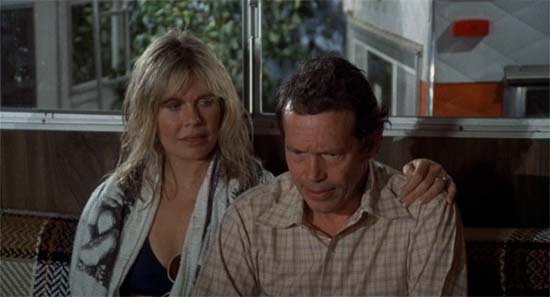 While Parker and Swit spend the entire second half of the film screaming hysterically and acting generally useless, Fonda and Oates do a nice job splitting the role of the sympathetic protagonist. Oates, who was excellent in Two-Lane Blacktop (1971), here gets to take his good-ol’-boy persona through several gradual shades of nervous breakdown, his slow-burning paranoia eventually reducing him to gunning his RV straight through a road blockade where a bus has apparently crashed – because why would a school bus be out on a Sunday? (He’s right; it’s another trap from the absurdly resourceful Satanists.) Fonda, too, is enjoyable to watch, underplaying each scene, guardedly observing every stranger, until he finally gets to violently let loose on the cultists during one final, desperate siege of the RV.
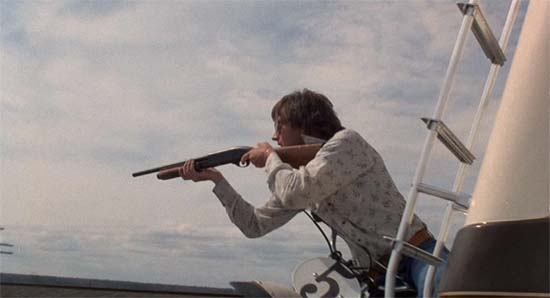 That last action scene, though perhaps a bit too brief, still offers a satisfying finale. Anticipating the climax of The Road Warrior by six years, it serves up a complex stunt sequence in which the Satanists join the RV in high-speed pursuit, leaping from their vehicles to climb aboard, as Oates, at the wheel, tries to shake them off, and Fonda chucks molotov cocktails from the roof and then blows them away, one at a time, with his rifle. There’s even a suspense scene involving those ridiculous little hand-cranked skylights which every RV has. It was obviously a joy to shoot these stunts. At one point a rooftop dummy standing in for one of the cultists gets thwacked by a low-hanging bridge; and as the RV swerves desperately to avoid a “wide-clearance” house being trucked down the center of the road, in the same shot you can see Fonda (or his stuntman) atop the RV firing blanks from his rifle.